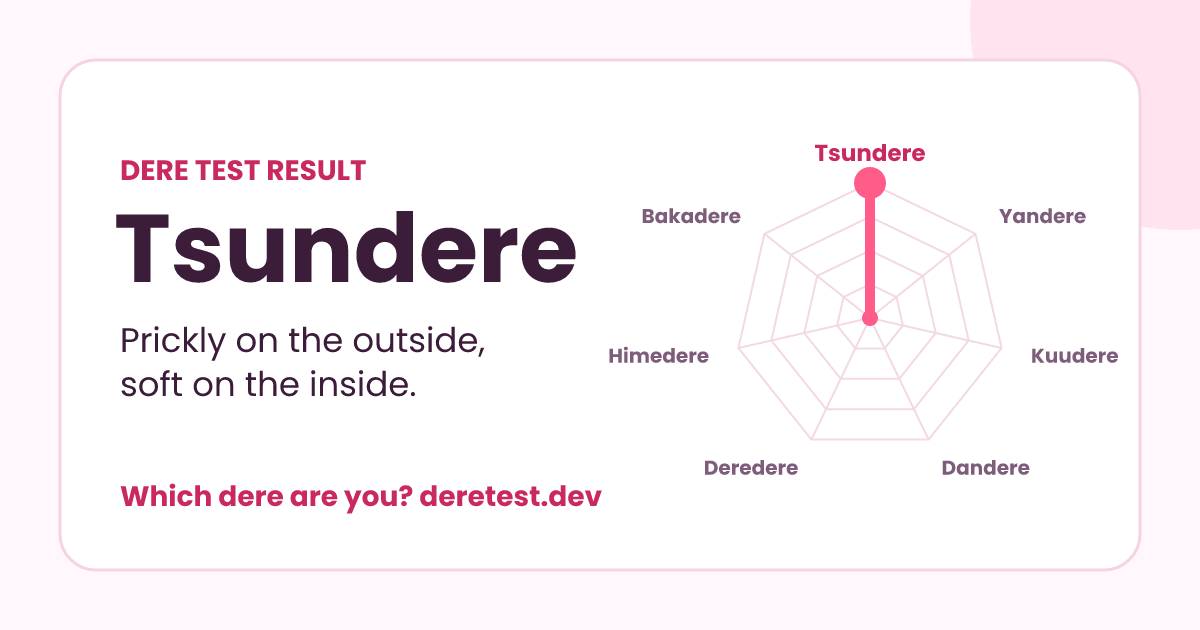
What a high Tsundere score means
The Tsundere part of the dere test asks about four habits: brushing off compliments, acting annoyed with people you clearly like, saying the opposite of what you feel when you are embarrassed, and doing kind things where nobody can see. A high score means most of those sound like you. Your affection is real; it just takes a detour on the way out.
How it shows up day to day
- You help a friend move and then insist you only came for the pizza.
- A compliment makes you change the subject or answer with a joke.
- You remember someone's exam date and text "good luck, not that you need it".
- Teasing is how you say "I'm comfortable with you".
Strengths and blind spots
Tsundere people tend to be fiercely loyal, practical and hard to flatter, so friends trust their opinion. They show up with actions instead of speeches.
The blind spot is the "tsun" half. People who don't know you yet can read the prickly reflex as real dislike, and the moment to say something kind can pass while you are busy denying it. A short, plain sentence such as "I'm glad you came" usually costs less than it feels.
Tsundere with a second type
When your second score is within six points, the dere test calls it a streak. Common pairings:
- Tsundere with a Kuudere streak: composed in public, flustered only with the few people who get close.
- Tsundere with a Himedere streak: proud and a little demanding, then secretly delighted when someone makes the effort.
- Tsundere with a Bakadere streak: the denial comes with slapstick: you trip over your own excuses and everyone sees through them.
When a Tsundere result might be off
Two of the four Tsundere statements are about humor and deflection: brushing off compliments with a joke, and friends teasing you for acting annoyed with people you like. Plenty of people who simply enjoy banter agree with those, so a playful Bakadere or Deredere can collect a decent Tsundere score without the defensive streak behind it. The statements that really separate a tsundere are the other two: saying the opposite of what you feel when you are embarrassed, and doing kind things where nobody can see. If you agreed with the joking pair but not with those, check your second-highest score. It may describe you better.
Tsundere questions
Is a tsundere just being rude?
No. Rudeness is meant to push someone away, while the tsundere act is meant to hide how much someone matters. The difference shows over time: a tsundere keeps turning up, helping and remembering the details. If the sharp reflex starts to sting people who don't know you yet, a quick "kidding, thank you" afterward keeps the teasing friendly.
How do you get a tsundere to open up?
Don't corner them. Pointing out the soft side ("aww, you do care!") usually triggers more denial. Notice it quietly, return the favor, and give them easy ways to be kind without making a speech of it. Trust grows faster when admitting a feeling doesn't cost them face.
Tsundere in anime and manga
Tsundere is a classic dere type in anime, manga and visual novels. Writers use it for slow-burn stories: the character starts out sharp-tongued, and the fun is watching the walls come down. The archetype is exaggerated for comedy and drama, and real people are rarely that prickly all the time. Treat your result as a playful label for how you show affection, then compare radar charts with friends.