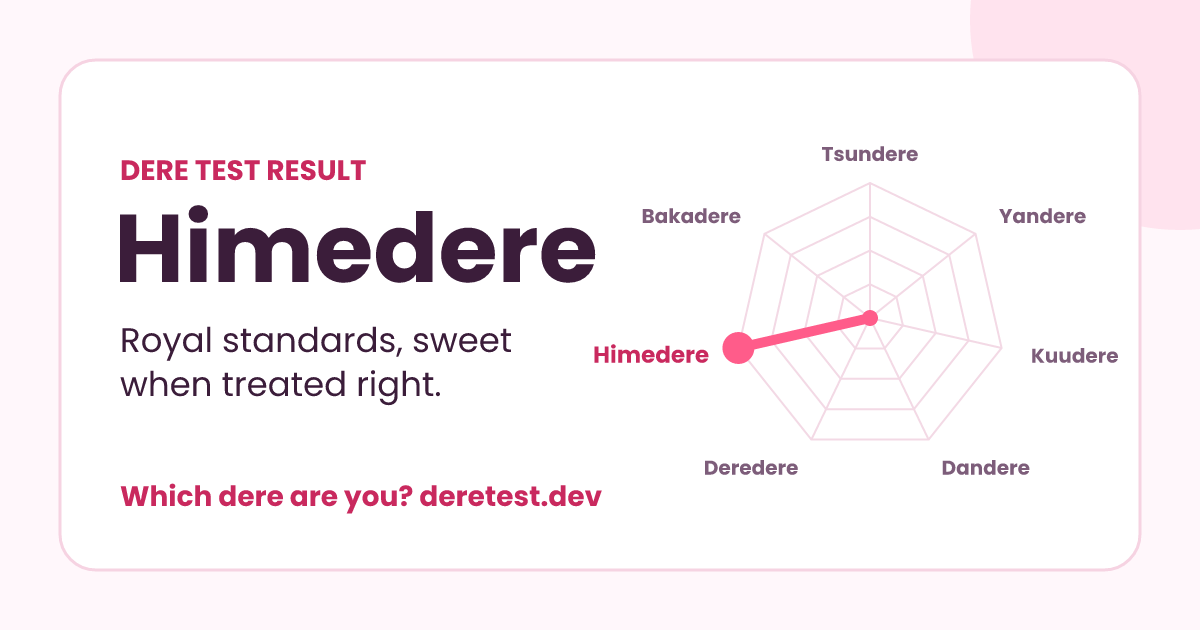
What a high Himedere score means
Himedere comes from hime, princess. The Himedere statements in the dere test cover high standards, enjoying admiration for your work or style, expecting people to come to you, and liking it when someone makes an effort to treat you as special. A high score means you know your worth and appreciate being noticed. Under the crown there is a soft spot for people who try.
How it shows up day to day
- You have opinions about how things should be done, and you share them.
- A thoughtful gift or a compliment on your effort makes your day.
- You would rather be invited than chase an invitation.
- Once someone earns your trust, you are generous and protective.
Strengths and blind spots
Himedere people are confident and clear about what they want. Their standards push friends and teams to do better, and they rarely settle for "good enough".
The blind spot is distance. Waiting for people to come to you can read as aloofness, and high standards can sound like criticism when you don't mean it that way. Meeting someone halfway now and then, or praising them first, keeps the royal energy fun instead of tiring.
Himedere with a second type
- Himedere with a Tsundere streak: proud on the outside, flustered when someone actually spoils you.
- Himedere with a Kuudere streak: composed, selective and quietly loyal.
- Himedere with a Deredere streak: a warm host who loves treating people and being treated.
When a Himedere result might be off
Two of the Himedere statements are about liking appreciation: people making an effort to treat you as someone special, and admiration for your hard work or style making your day. Most people enjoy both, so even mild agreement adds up quickly. The statements that set a himedere apart are the other two: having high standards and saying so, and expecting people to come to you rather than the other way around. If you agreed with the appreciation pair but disagreed with those, your Himedere score may be measuring an ordinary wish to be noticed rather than a royal streak.
Context matters too. Many people hold high standards for their work or a hobby they care about, and expect others to put in effort there, without wanting special treatment anywhere else. If you answered the standards statement thinking about your craft, a high Himedere score may describe your attitude to quality more than your attitude to affection.
Himedere questions
What is the male version of a himedere?
Fans sometimes call it oujidere, from ouji, prince: a character who carries himself like royalty and expects to be treated that way. This test uses Himedere for everyone, since the statements describe behavior rather than gender.
How do you treat a himedere?
With effort rather than flattery. Notice details, keep your promises, and make plans instead of leaving everything to chance. Himedere people tend to respond to sincerity and consistency more than to grand gestures, and they relax once they trust that they matter to you. A forgotten promise usually stings a himedere more than a missing compliment, because it suggests they were not a priority.
Himedere in anime and manga
In anime and manga, the himedere acts like royalty, whether or not they actually are. The comedy comes from their demands; the charm comes from the moments they soften. A Himedere result in the dere test is a playful way of saying you value being appreciated, and you return that care to the people who show up.